
How To Improve Your Workouts Using RPE
Fitbits, smartwatches and health apps are all the rage lately – but are they actually helpful?
Yes and no.
What gets measured, gets managed. (yay!)
However…..it’s easy to get caught up in the numbers, and forget ALL about how you FEEL during a workout.
Your body is an *excellent* communicator. And it can be counterproductive (and dangerous!) to ignore your body’s cues, when you work up a sweat.
One easy way to keep tabs on your body? Use the RPE scale!
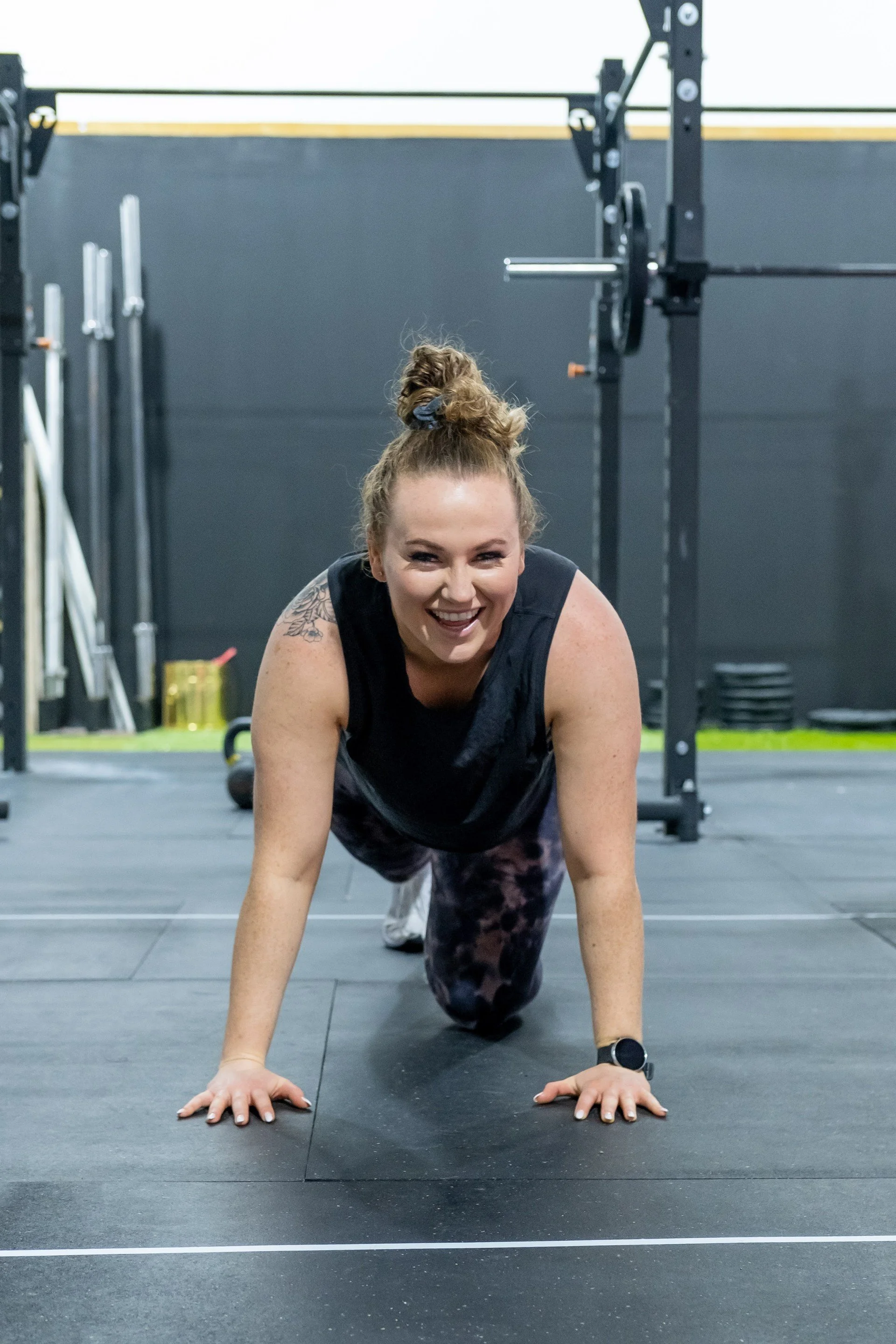
What is RPE?
RPE stands for Rate of Perceived Exertion, and it’s a tool to measure the intensity of your workout.
RPE is based on how hard you FEEL like your body is working, based on: increased heart rate, breathing rate, and muscle fatigue.
RPE Scale
RPE 1-3: Easy intensity. You can talk normally, breathe easily, and your body feels relaxed, and comfortable.
RPE 4-6: Moderate intensity. You can talk in short spurts, your breathing is more labored, but you're still working within your comfort zone.
RPE 7-9: Hard intensity. You can barely talk, you're breathing heavily, and you're working outside your comfort zone.
RPE 10: Max-effort intensity. You can't talk, you're gasping for breath, and you're working to failure.
Benefits of RPE
RPE is a great way to be able to communicate to your coach how difficult an exercise is. It’s also a great way for your coach to be able to program the intensity, or difficulty, they want you working at.
Another benefit? RPE can also help you avoid burnout. Hitting an RPE of 10, within the first few minutes of your hour-long workout, will over-tax your body. By paying attention to your RPE from the start, you can better pace yourself, and allow for a gradual increase of intensity.
The downside of RPE
The biggest downside of RPE, is that it’s a subjective measurement (which makes it less accurate). If you’re new to fitness, it it’s fairly common to underestimate your exertion level…..and it can take some time to learn how to tune into your body.
Give yourself some grace, and have patience. Learning your body’s language is a process.
How to start using RPE
My rule of thumb is we always want RPE to be at least a 7 or above for our movements. That’s to ensure that we are placing enough stimulus and demand on the body in order for adaptations to occur. Anything below that isn’t placing enough stress on the tissues to elicit the changes we’re looking for.
If you’re used to relying on gadgets during your workouts, try setting them aside. Then ask yourself how you’re feeling after each set, and monitor your body’s cues.
Want some help putting RPE into action? Book a 15-min “no sweat” intro call! I’d love to help you out, and provide you with a program that best suits your needs – whether it’s in-person training at the gym, or self-led remote programming!
Yours in strength,
Mia